
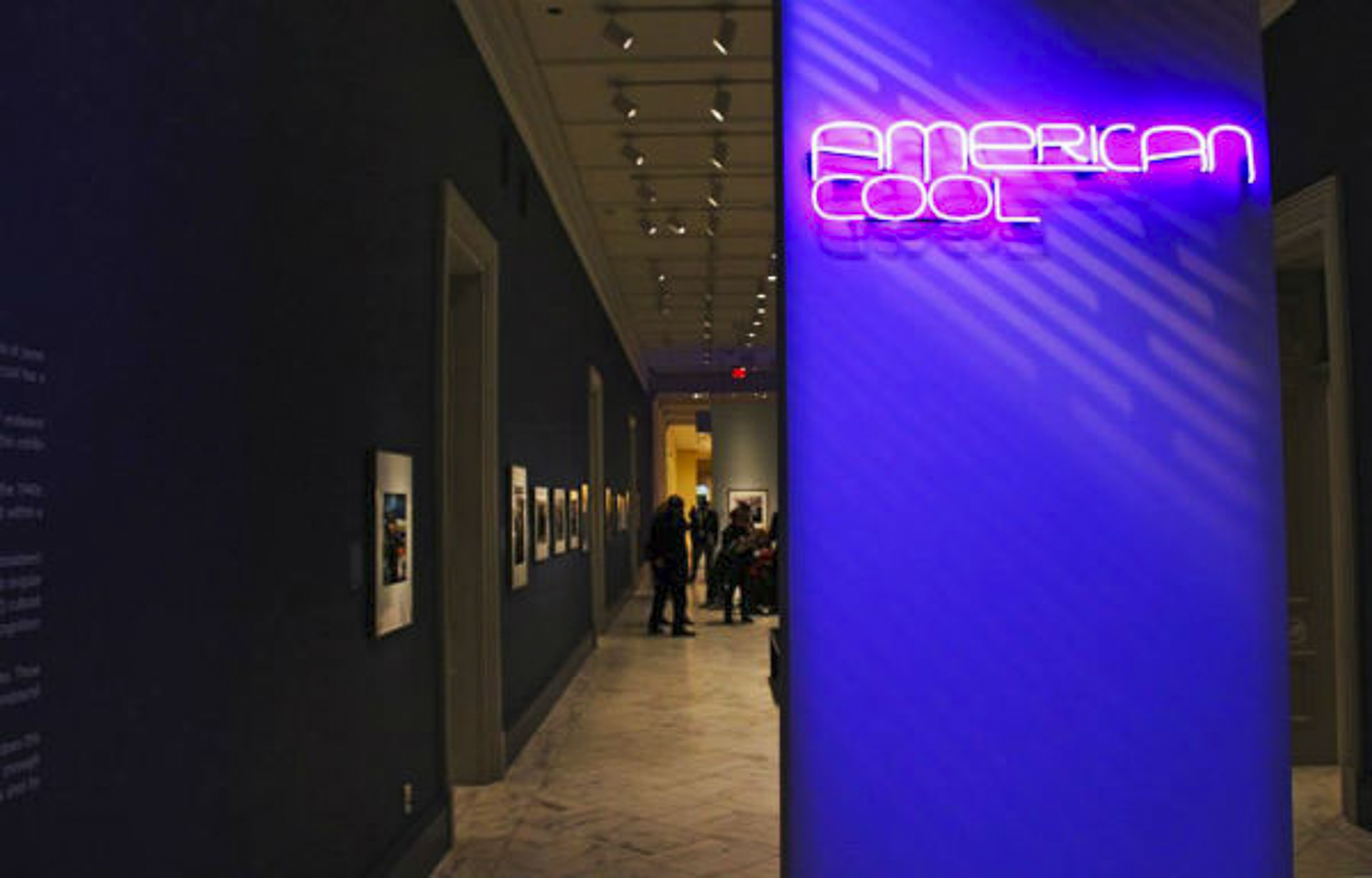



What do we mean when we say someone is cool? To be cool means to exude the aura of something new and uncontainable. Cool is the opposite of innocence or virtue. Someone cool has a charismatic edge and a dark side. Cool is an earned form of individuality.
Each generation has certain individuals who bring innovation and style to a field of endeavor while projecting a certain charismatic self-possession. They are the figures selected for this exhibition: the successful rebels of American culture.
The legendary jazz saxophonist Lester Young created the modern usage of “cool” in the 1940s. At first it meant being relaxed in one’s environment against oppressive social forces, but within a generation it became a password for stylish self-control.
For the American Cool exhibit, each icon was considered with the following historical rubric in mind and possesses at least three elements of this singular American self-concept:
- an original artistic vision carried off with a signature style
- cultural rebellion or transgression for a given generation
- iconic power, or instant visual recognition
- a recognized cultural legacy
Every cool icon here created an original persona without precedent in American culture. These photographs capture the complex relationship between the real-life person, the image embraced by fans and the media, and the person’s artistic work.
What does it mean when a generation claims a certain figure as cool? What qualities does this person embody at that historical moment? American Cool explores these questions through photography, history, and popular culture. In this exhibition, cool is rendered visible, as shot by some of the finest art photographers of the past century.
Interviews
The Reading Life, WWNO New Orleans
Click for streaming web player.
The Kojo Nnamdi Show, WAMU-FM, Washington DC, August 11, 2014
Click for streaming web player.
Joel Dinerstein, associate professor of English and director of the New Orleans Center for the Gulf South, discusses the American Cool exhibit he co-curated at the Smithsonian Institution's National Portrait Gallery.